
Short Answer
A cast often feels tight because swelling occurs after an injury or surgery. Mild pressure is common during the first few days of recovery, especially when the injured arm or leg is hanging down. However, increasing tightness, severe pain, numbness, tingling, or changes in skin color should be reported to your orthopedic provider immediately.
What Is Happening?
After a fracture, injury, or orthopedic surgery, your body responds with inflammation and swelling. This is a normal part of healing because extra blood flow and fluid help deliver nutrients and healing cells to the injured area.
Unlike a bandage, a cast does not expand. As swelling develops inside the cast, you may notice pressure, tightness, or a feeling that the cast suddenly fits differently.
Many patients notice increased tightness:
- During the first 24–72 hours after injury or surgery
- After periods of activity
- When the arm or leg hangs below heart level
- Toward the end of the day
- During warm weather
- Following long periods of standing or walking
Some pressure is expected during recovery, but swelling should gradually improve over time.
Does It Matter If My Cast Is On My Arm or Leg?
Yes. While swelling causes tightness in both arm and leg casts, the situations that trigger swelling can be slightly different.
Arm Casts
Patients often notice increased pressure when the arm hangs down at their side for long periods. Gravity can cause fluid to collect in the hand and fingers, making the cast feel tighter.
Many orthopedic providers recommend elevating the arm above heart level during the early stages of recovery to help manage swelling.
Leg Casts
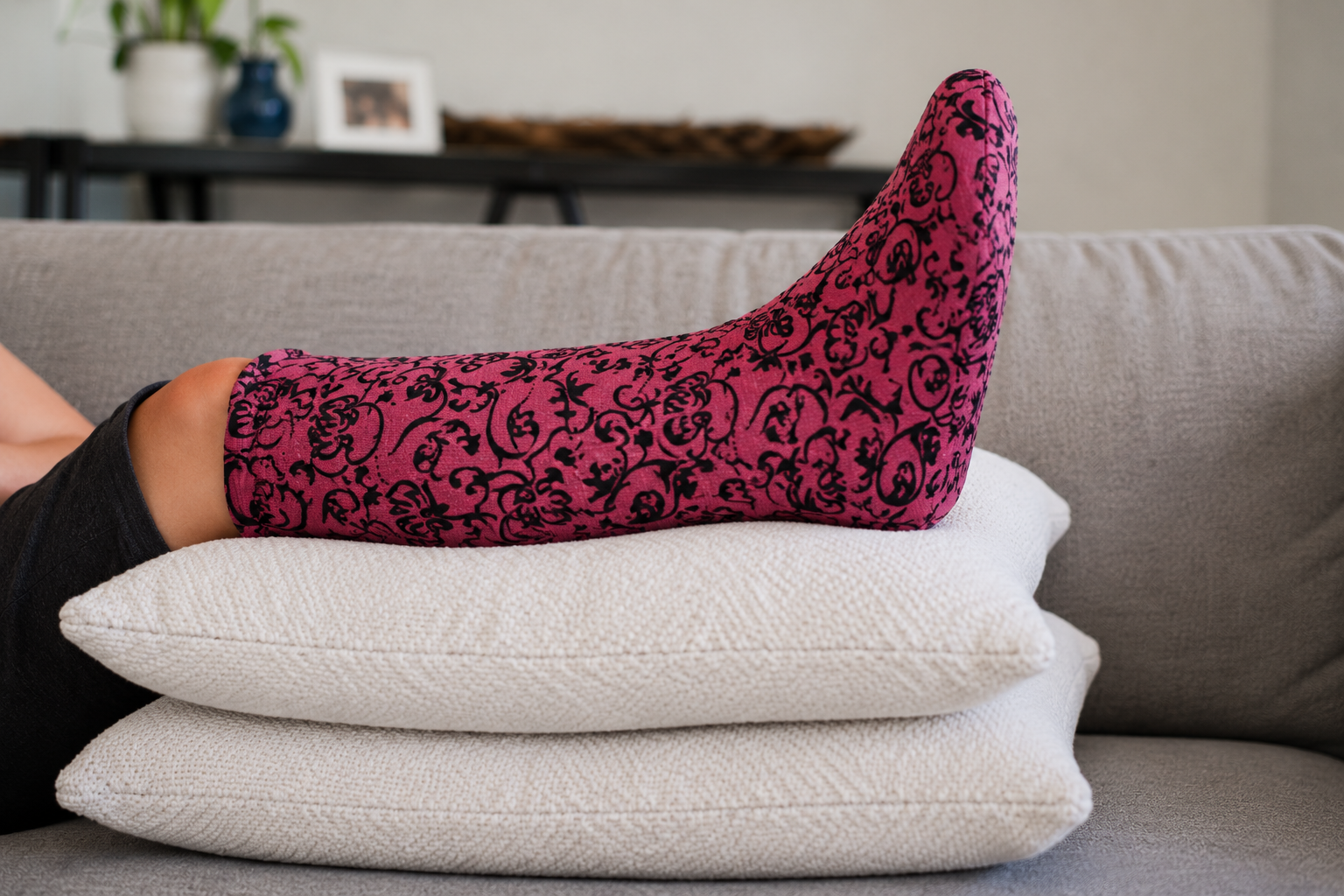
Leg casts often feel tighter after standing, walking, or sitting with the foot on the floor for extended periods. Gravity can increase swelling in the foot, ankle, and lower leg.
Elevating the leg and limiting activity when swelling increases may help improve comfort.
Why It Matters
Although some tightness is normal, excessive pressure inside a cast can sometimes become a medical concern.
Contact your orthopedic provider immediately if you experience:
- Severe or worsening pain
- Numbness or tingling
- Burning sensations inside the cast
- Fingers or toes becoming pale, blue, or cold
- Significant swelling outside the cast
- Difficulty moving fingers or toes
- A cast that suddenly feels much tighter than before
These symptoms may indicate swelling that requires prompt evaluation.
What May Help
Elevate the Injured Limb
Elevation is one of the most common recommendations for managing swelling.
- Arm casts are often elevated above heart level using pillows.
- Leg casts are often elevated so the ankle sits above the level of the heart.
Follow your provider's specific instructions.
Rest and Reduce Activity
Excessive activity may increase swelling and discomfort. Rest periods can help give your body time to heal.
Move Unaffected Joints
If approved by your provider, gently moving your fingers or toes may encourage circulation and reduce stiffness.
Follow Your Provider's Ice Instructions
Some orthopedic teams recommend icing around the cast area. Never place ice directly inside a cast and avoid getting the cast wet.
Pay Attention to Changes
A cast that feels slightly tight after activity is often different from a cast that becomes progressively tighter throughout the day. Monitoring changes can help you identify when it's time to contact your provider.
Helpful Product Pathway
Recovery can be challenging, especially when swelling, itching, and discomfort make daily life more difficult.
Many patients find comfort from products designed specifically for orthopedic recovery, including:
- CastCoverz! for Legs for protecting arm casts from dirt, pet hair, and everyday wear.
- CastCoverz! for Arms for protecting leg casts from dirt, pet hair, and everyday wear.
- CastCooler® products to help circulate air around itchy casts.
- Waterproof Protection Products for keeping your cast dry.
While comfort products cannot treat swelling, they may help make recovery more manageable while your body heals.
FAQs
▶ Is it normal for a cast to feel tight at first?
Yes. Mild tightness is common during the first few days after an injury or surgery because swelling is a normal part of the healing process.
▶ Why does my cast feel tighter at night?
Swelling often increases throughout the day due to activity, standing, walking, or keeping the injured limb below heart level.
▶ Can hot weather make my cast feel tighter?
Yes. Heat may contribute to increased swelling, which can make a cast feel tighter than usual.
▶ Will elevating my arm or leg help?
Elevation may help reduce swelling by encouraging fluid to move away from the injured area.
▶ Why are my fingers or toes swollen outside the cast?
Some swelling beyond the cast edges can be normal. Significant or worsening swelling should be discussed with your provider.
▶ Should I loosen my cast if it feels tight?
No. Never attempt to remove, cut, or alter your cast. Contact your orthopedic provider if you are concerned about increasing pressure.
▶ When should I call my doctor about a tight cast?
Call your provider immediately if you experience severe pain, numbness, tingling, discoloration, cold fingers or toes, or rapidly increasing tightness.
▶ Can walking make my leg cast feel tighter?
Yes. Standing and walking may increase swelling in the foot and ankle, especially during the early stages of recovery.
Arm Recovery Resources
- Arm Cast, Brace & Sling Recovery Guide
- Arm Sleep & Rest Guide for Casts, Braces & Slings
- Arm Weather Protection Guide for Casts, Braces & Slings
Leg Recovery Resources
- Leg Cast, Brace & Crutches Recovery Guide
- Leg Sleep & Rest Guide for Casts, Braces, Crutches & Walking Boots
- Leg Weather Protection Guide for Casts, Braces, Crutches & Walking Boots
Product Resources
- CastCoverz! Cast Covers for arms
- CastCoverz! Cast Covers for legs
- CastCooler® Itchy Cast Relief
- Waterproof Protection Products
Healing takes time, but comfort can help every step (and every night) feel a little easier. If you have any questions, give us a call at 1-800-CASTCOVER (9am-2 pm PST, M-F) or email cs@castcoverz.com.
Medical Disclaimer: You Heal Here provides educational information and practical recovery support for orthopedic patients and caregivers. This information is not a substitute for medical advice, diagnosis, or treatment. Never cut, loosen, remove, or alter a cast yourself. Contact your orthopedic provider immediately if you experience severe or worsening pain, numbness, tingling, burning, discoloration, cold fingers or toes, difficulty moving them, or rapidly increasing tightness.