It's FriYAY!!! :) FREE SHIPPING & NO MINIMUMS! WOW! Ends Tonight, FriYAY the 16th!! USA D2C on-line orders only.

An arm cast, brace, or sling can feel very different once you step outside. Summer heat may make it feel warm and itchy. Cold weather can leave exposed fingers feeling uncomfortable. Rain, snow, and wind can make it harder to keep your recovery device clean, dry, and protected.
This guide shares practical ways to stay comfortable and protect your cast, brace, or sling in changing weather.
Biggest Challenge: Protecting your recovery device while keeping your arm comfortable in changing weather.
Most Common Questions: How do I protect my cast in the rain? Can heat make swelling worse? How do I keep my fingers warm? What should I wear over a sling?
What Helps Most: Checking the forecast, dressing in comfortable layers, using the right weather protection, and following your healthcare provider’s instructions
Good News: A little preparation can make it much easier to get outside and continue your normal routine while you heal.
Weather can affect both your comfort and your recovery device. Heat and humidity may make casts, braces, and slings feel warmer or cause moisture to collect underneath them. Cold weather may make your arm or fingers feel stiff and uncomfortable. Rain and snow can soak cast padding, brace fabric, or sling material if they are not properly protected.
Casts, braces, and slings can trap heat close to your skin. On warm or humid days, you may notice more sweating, itching, or swelling. Lightweight clothing, time in the shade, and regular breaks indoors may help you stay more comfortable. Avoid placing powders, lotions, or objects inside a cast unless your healthcare provider specifically recommends them.
Cold temperatures can make exposed fingers feel uncomfortable and may leave your arm feeling stiff. Wear loose layers that do not press against your cast or brace, and use a coat that is easy to put on without forcing your injured arm through a tight sleeve. Keep exposed fingers warm, but avoid direct heat against your cast, brace, or skin.
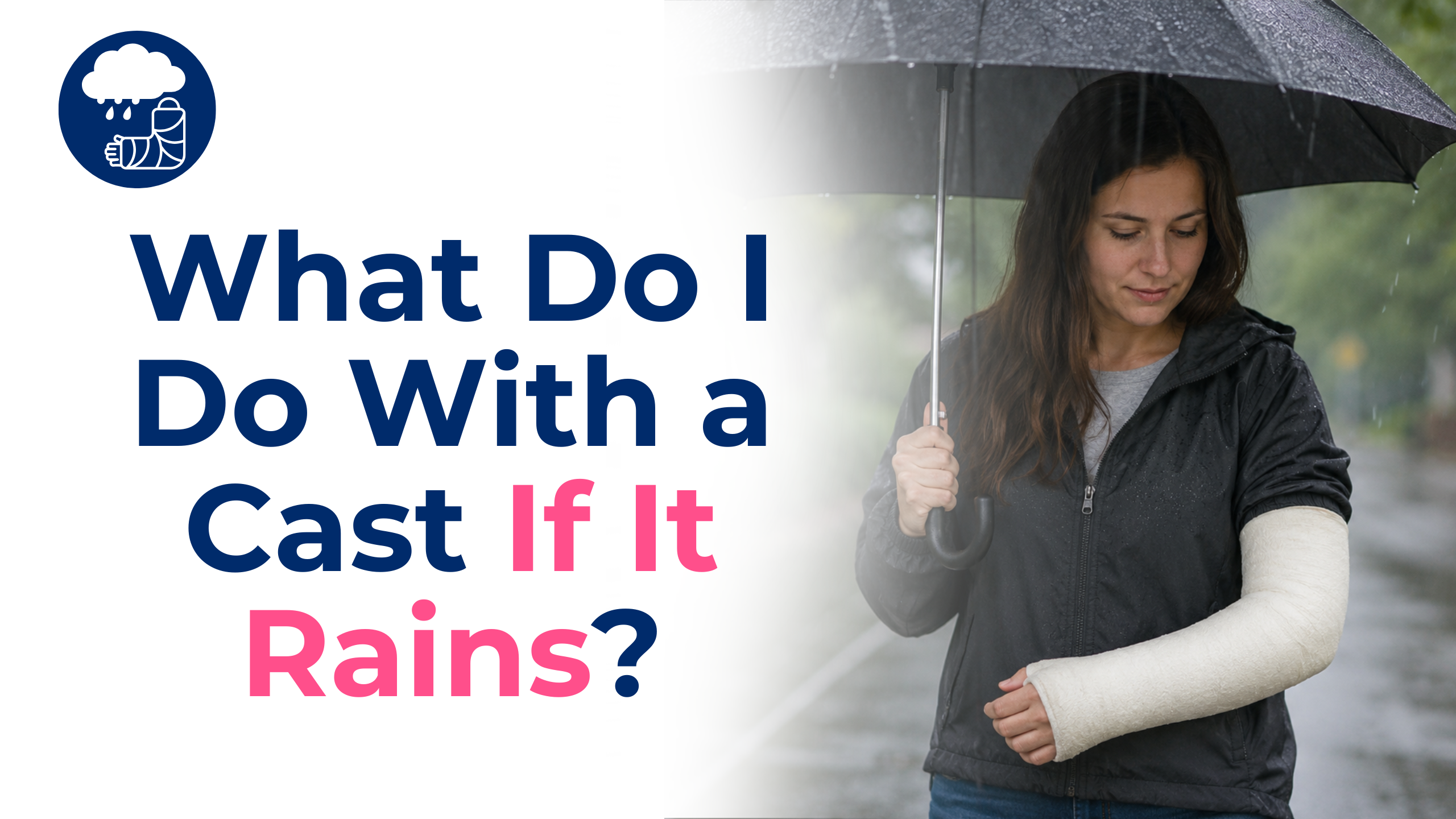
Even a quick trip through a parking lot can leave a cast, brace, or sling damp. Traditional casts should usually stay dry, and fabric recovery devices may absorb water and become uncomfortable. Waterproof or weatherproof protection can help shield your device from rain and splashes when you need to go outside. Learn More: What Do I Do With a Cast If It Rains?
Snow can melt onto your recovery device, while heavy coats and winter layers can make getting dressed more difficult. Choose loose outerwear, protect your cast or brace from moisture, and move carefully on slippery sidewalks. A poncho, cape, oversized coat, or jacket worn over the shoulders may be easier to manage than a fitted coat.
Strong wind may make a sling shift or leave an uncovered arm feeling cold. Bright sun and high temperatures can also make dark recovery devices feel warmer. Make sure your sling is fitted as your healthcare provider instructed, and use loose, breathable clothing to protect exposed skin without placing pressure on your injury.
Weather can make dressing with an arm injury even more challenging. Loose sleeves, front-opening shirts, ponchos, capes, and oversized jackets are often easier to manage than tight clothing. Dress the injured arm first and remove it last, unless your healthcare provider has given you different instructions.
Many patients use weatherproof cast covers, waterproof arm protectors, sling covers, strap padding, and loose outerwear to help protect their recovery device outdoors. A poncho or cape may also be easier to wear than a traditional jacket when arm movement is limited.
Most people think about protecting a cast in the shower. They do not always think about the rainstorm that starts while they are at work, the cold morning school drop-off, or trying to fit a sling under a winter coat. Over the past 17+ years, we have learned that small preparations make a real difference. Checking the weather, choosing easier clothing, and carrying protection for your cast, brace, or sling can help you feel more confident about leaving the house.

Great for active, outdoor people
Great! my daughter works FT in the equine industry, riding, grooming, exercising, vet care, etc. Lots of water is involved and this protected her hand cast perfectly so she could remain active
Ski team woes
My daughter broke her thumb half way through ski season and while her doc gave her the go ahead to keep skiing with her cast, I couldn't find a way to keep her hand/ fingers warm and cast dry. I ordered the dry and the cozy mitt together and they work! Lucy is able to ski, thread her hand through her pole, and continue with her sport. The owner also called me after I placed my order because she thought I might have ordered the wrong size - and she was right. So, before shipping off the products to me, she reached out, corrected the problem, and I still managed to get the mitts before leaving for Tahoe that weekend. Thanks!
Outstanding product, great customer service
It you've ever tried to put a glove over an arm cast, good luck. My son broke his arm, yet was clear to ski anyway. The problem was we couldn't keep his hand warm until we found this. The product is as advertised, it will cover your hand and fit over your cast. My son did say he needed a hand warmer but he would not have been able to participate without this product. Customer service was also outstanding, they actually answer the phones and guided me through purchasing the correct size. Product was shipped same day as promised and received two days later.
No more sock!
Thank you for creating this great product. I could not find anything other than a sock to cover my fingers LOL. Even a oven mitt was too small. NY early mornings are already cold. Really helps!!!
Use waterproof or weatherproof protection designed to fit over an arm cast. Make sure the cover is secure before going outside, and avoid heavy rain or prolonged exposure whenever possible.
Heat and humidity may make a cast, brace, or sling feel warmer and may increase sweating, itching, or swelling. Staying hydrated, taking breaks indoors, and keeping the recovery device dry may help improve comfort.
Loose gloves or mittens may help keep exposed fingers warm, as long as they do not feel tight or place pressure on the cast. Avoid direct heat, heating pads, or hot water near the cast or injured area.
Loose coats, oversized jackets, ponchos, and capes are often easier to wear over a sling. Avoid forcing the injured arm through a tight sleeve or placing pressure on the shoulder, arm, or recovery device.
Some braces and slings can tolerate light moisture, but many contain fabric, foam, straps, or metal parts that should not be soaked. Check the care instructions and follow your healthcare provider's guidance.
Use weatherproof protection to help keep melting snow away from the cast. Brush off snow before going indoors and check that the cover is still secure and the cast remains dry.
A plastic bag may offer limited protection from light splashes, but it can tear, leak, or allow water in around the opening. A cover designed for an orthopedic recovery device usually provides more reliable protection.
Follow the manufacturer's care instructions. Many fabric parts can be air dried, while removable liners may have separate washing directions. Avoid high heat unless the instructions say it is safe.
Contact your healthcare provider if the inside of the cast feels damp or soaked. Do not insert towels, objects, powders, or lotions into the cast, and do not use high heat to dry it.
Contact your provider if your cast, brace, or sling becomes soaked or damaged, or if you notice increasing pain, severe swelling, numbness, changes in skin color, drainage, odor, skin irritation, or anything else that concerns you.
A little preparation can help you stay comfortable in every season while you heal.
From hot summer afternoons to cold, rainy mornings, You Heal Here is here to help you protect your cast, brace, or sling and manage the everyday challenges that come up between appointments.
If this guide helped you feel more prepared, less overwhelmed, or simply reminded you that you are not alone, then it has done exactly what You Heal Here was created to do.
Helping You Live Life While You Heal.
Have questions about living with a cast, brace, sling, or walking boot?
Call us at 1-800-CASTCOVER
Monday–Friday, 9 a.m.–2 p.m. PT
Or email cs@castcoverz.com
You Heal Here provides practical recovery support and everyday living guidance, but it is not a substitute for medical advice. Always follow your healthcare provider's instructions.