
Summer vacations, beach trips, and outdoor family activities don’t stop just because you’re recovering from a broken bone or orthopedic injury. But if you’re wearing an orthopedic walking boot, you’ve probably already realized that sand, heat, Velcro straps, and bulky boots can quickly become frustrating during beach recovery.
Many orthopedic patients ask:
- How do I keep sand out of my walking boot?
- Why does my walking boot collect so much lint and debris?
- Can I wear a walking boot on the beach?
- Why does walking in sand feel unstable with a boot?
- How do I keep Velcro straps from sticking to everything?
The good news is that with a little preparation and a few practical recovery solutions, many people are still able to comfortably enjoy beach trips while healing.
After helping orthopedic patients for over 17 years, CastCoverz! has learned that small comfort solutions can make a surprisingly big difference during everyday recovery. Proudly MADE IN THE USA, CastCoverz! was invented by a mom navigating real-life orthopedic recovery challenges and creating practical products designed for healing in the real world.
Why Walking Boots Become So Frustrating at the Beach
Walking boots naturally attract:
- sand
- lint
- dust
- towel fuzz
- pet hair
- sunscreen residue
- dirt and debris
And the Velcro straps often stick to:
- blankets
- towels
- beach bags
- socks
- clothing
- carpet
- almost every soft surface nearby
Many orthopedic patients are surprised by how quickly their boot starts looking dirty and worn during summer recovery.
Heat and humidity can also make boots feel:
- sweaty
- hot
- itchy
- uncomfortable
When combined with sand and outdoor walking, recovery can quickly become exhausting.
Why Walking on Soft Sand Feels Unstable in a Walking Boot
One of the biggest challenges many patients experience is instability while walking on soft sand.
Orthopedic walking boots already create:
- uneven gait mechanics
- leg length imbalance
- altered walking patterns
Soft sand makes this even more difficult because the foot naturally rolls and sinks unevenly with each step.
Important Walking Boot Tip
Hard-packed sand is usually much safer and more stable than soft sand while wearing a walking boot.
Many patients notice:
- increased hip pain
- knee discomfort
- lower back strain
- fatigue
- balance issues
after walking on soft sand for extended periods.
If you experience persistent hip, knee, or back pain while wearing a boot, products like EvenUp® may help improve walking alignment by helping balance leg height differences created by the boot.
Related Recovery Article
Read:
How to Keep Sand Out of Your Walking Boot
Keeping sand completely out of a walking boot can be difficult, but there are ways to reduce how much debris gets trapped inside.
Many orthopedic patients use:
- Legz! cast covers to put over your foot, and then slide on your boot. This will keep most sand out of your toes. Legz! is a woven product so a little bit of sand could still wiggle through. If you have a leg cast, please read this article.
- Bootz! or BootGuardzXtreme! products. They are designed to cover orthopedic walking boots leaving the sole exposed for your safety (custom products are available for post-op shoes and “Jesus Sandals,” too). The Bootz! Is our daily wear product designed to cover the boot and to prevent velcro straps from catching and snagging everything–including blowing sand. Bootz! is available in solids and a variety of prints. Our Bootz! are designed to stretch around the perimeter of the edge of your boot leaving the sole exposed for your safety. PLEASE NOTE: Walking on “soft” sand tends to roll your foot. You are already compromised due to your injury and your gait is uneven due to the boot. Please be careful while in a boot. In addition, the sand could “push” against the side of the boot popping up your daily wear Bootz! so be sure to use and adhere the included repositionable adhesive strips that anchor it to the sides of your boot. FYI…“Hard-packed” sand doesn’t roll the foot.
- Lightweight protective wraps
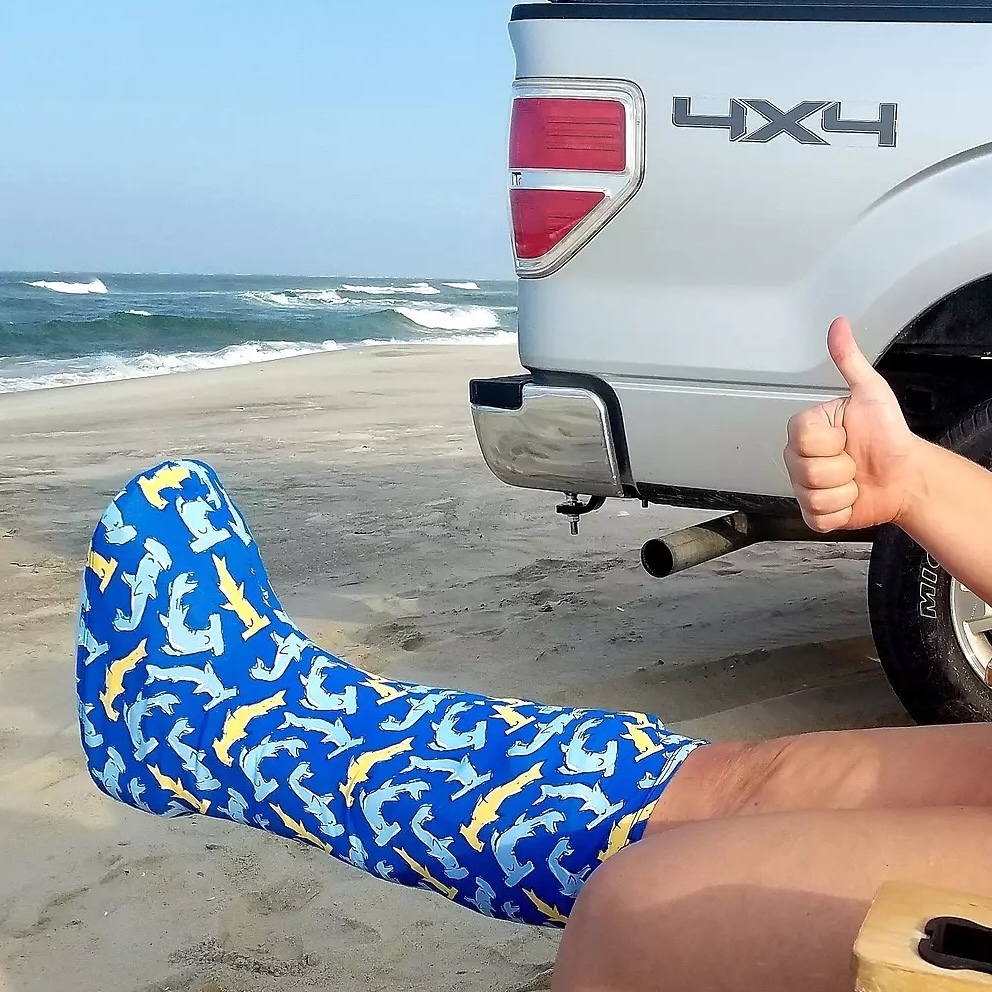
to help reduce exposure to:
- blowing sand
- lint
- fuzz
- dirt
- debris
Some patients also use Glad® Press’n Seal® around the lower leg area before putting on the boot to help reduce sand exposure around the toes and straps during short-term outdoor activities.
However:
never cover the sole of your walking boot.
Doing so can:
- create slipping hazards
- increase fall risk
- damage materials
- interfere with safe walking
If you are experiencing hip, knee or back pain since walking with a boot, combined with a tennis shoe, EvenUp© provides immediate relief! Many of our customers (and doctors) report physical therapy is often needed to correct the misalignment you may experience. So contact your doctor if the pain does not subside.
If you have any questions, don’t hesitate to call us at 1(800) CASTCOVER (1-800-227-8268) or email cs@castcoverz.com for assistance.
Can You Swim With a Walking Boot?
Important Safety Warning
Never swim while wearing an orthopedic walking boot.
There are currently no truly waterproof products designed to safely seal an orthopedic walking boot for swimming.
Walking boots become:
- slippery
- unstable
- heavy in water
- unsafe to walk in
This increases the risk of:
- falls
- reinjury
- instability
- water damage
For safety, always follow your orthopedic provider’s instructions regarding water activities during recovery.
Helpful Beach Recovery Tips
Going to the beach with a walking boot? Here are a few helpful recovery tips:
- Stay on hard-packed sand whenever possible
- Bring extra towels and loose clothing
- Keep your boot dry and debris-free
- Avoid excessive heat exposure
- Stay hydrated during outdoor recovery activities
- Elevate your leg when resting
- Bring backup recovery supplies
- Clean Velcro straps regularly to remove trapped debris
Related Recovery Articles
Walking boot frustrations?
Read:
- Why Does My Walking Boot Stick to Everything?
- Why Does My Hip Hurt When I Wear a Walking Boot?
- Going to the Beach While Wearing a Cast or Walking Boot?
Need waterproof protection?
Explore waterproof recovery solutions.
Need more recovery comfort?
Learn more about:
Recovery Should Still Include Real Life
Orthopedic recovery already changes enough about everyday life. At You Heal Here and CastCoverz!, we believe patients should still be able to enjoy vacations, beach trips, family gatherings, and outdoor activities while healing.
That’s why CastCoverz! has spent over 17 years creating practical orthopedic recovery solutions designed to help people heal more comfortably in real everyday situations.
Recovery may slow you down temporarily — but with the right preparation and support, you can still enjoy the moments that matter while you heal.
Medical Disclaimer: You Heal Here provides educational information and practical recovery support for orthopedic patients and caregivers. This information is not a substitute for medical advice, diagnosis, or treatment. Ask your healthcare provider before walking on sand, entering the water, removing your boot, or changing your normal recovery activities. Follow all weight-bearing restrictions. Contact your provider if you experience worsening pain, swelling, numbness, tingling, skin irritation, balance problems, or other concerning symptoms.