
If your hip, knee, or lower back has started hurting while wearing a walking boot, you are definitely not alone. Many orthopedic patients are surprised to discover that the discomfort isn’t always coming from the original injury. The walking boot itself can actually cause it.
Walking boots are designed to protect and stabilize an injured foot or ankle during recovery. The problem is that they also elevate one side of the body higher than the other. This creates what’s called a leg length discrepancy, meaning one leg temporarily becomes longer than the other while you walk.
Even a small height difference can change the way your body moves.
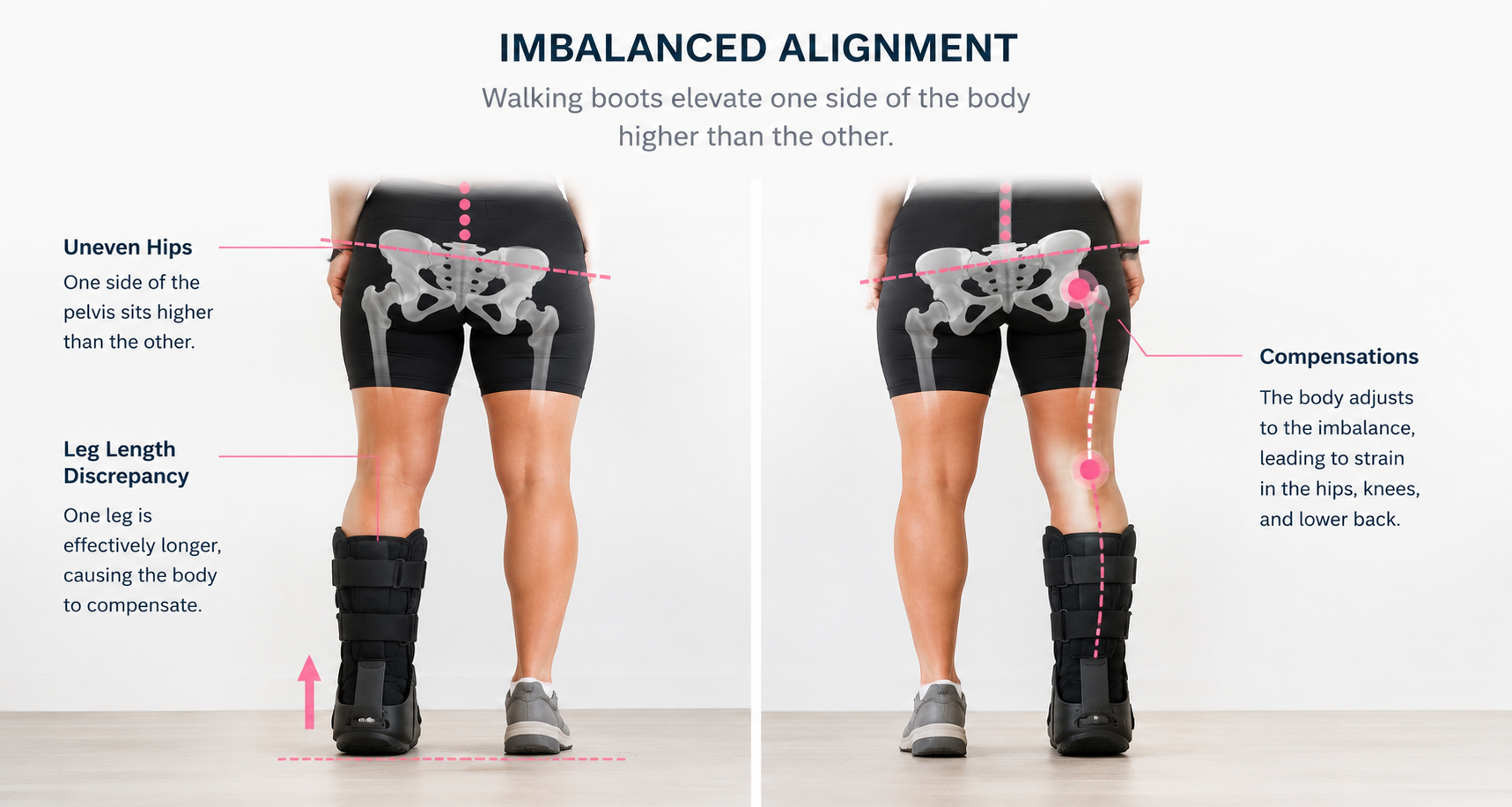
How a Walking Boot Changes Your Walking Mechanics
When one foot sits higher than the other, your body naturally tries to compensate. This can lead to:
- Uneven walking
- Limping
- Hip pain
- Knee pain
- Lower back discomfort
- Muscle fatigue
- Balance issues
- Added strain on joints
Over time, this uneven alignment can place extra stress on the hips, knees, pelvis, and lower back. Many people notice the discomfort gets worse the longer they wear the boot or the more active they become throughout the day.
Why the Pain Sometimes Feels Worse Than the Injury
A walking boot changes your normal gait pattern. Instead of walking naturally, your body has to adapt to the extra height and stiffness on one side.
This uneven movement can cause:
- Your hips to tilt unevenly
- Your lower back to work harder
- Extra pressure on one knee
- Strain on muscles and joints that are trying to compensate
Patients often describe it as:
- “My hips feel uneven.”
- “I feel crooked when I walk.”
- “My back suddenly started hurting.”
- “I’m limping everywhere.”
- “My good leg hurts now too.”
These are very common complaints during orthopedic recovery.
What May Help
One of the most helpful solutions is using a shoe balancer or shoe leveler on the opposite foot. These products are designed to help even out your walking height while wearing a boot.
By creating better alignment between both legs, many people experience:
- More comfortable walking
- Less limping
- Reduced hip and back strain
- Better balance
- Improved overall mobility during recovery
Recommended Product
The EVENup™ Shoe Balancer for Back Pain is designed to help offset the height difference created by orthopedic walking boots. It attaches to the shoe on your opposite foot to help promote more even walking alignment and reduce the uneven gait mechanics that can contribute to hip, knee, and lower back discomfort.

Recovery Takes Adjustment
Orthopedic recovery affects more than just the injured area. Small changes in movement and posture can create unexpected aches and pains throughout the body. The good news is that understanding why it’s happening is often the first step toward making recovery more comfortable.
If you’re experiencing hip, knee, or back pain while wearing a walking boot, it may not mean something is wrong with your recovery, your body may simply be reacting to the uneven height and walking mechanics created by the boot.
Medical Disclaimer: You Heal Here provides educational information and practical recovery support for orthopedic patients and caregivers. This information is not a substitute for medical advice, diagnosis, or treatment. Ask your healthcare provider or physical therapist before using a shoe balancer or changing how you walk in your boot. Contact your provider if you develop new, persistent, or worsening hip, knee, back, or leg pain; increased swelling; numbness; tingling; balance problems; or other concerning symptoms.